How to set a dinner table: plates, cutlery and glassware
Learn how to set a dinner table the British way: where the fork, knife, spoon and glass go, how much space each guest needs, and the fixes.
The short answer: what goes where
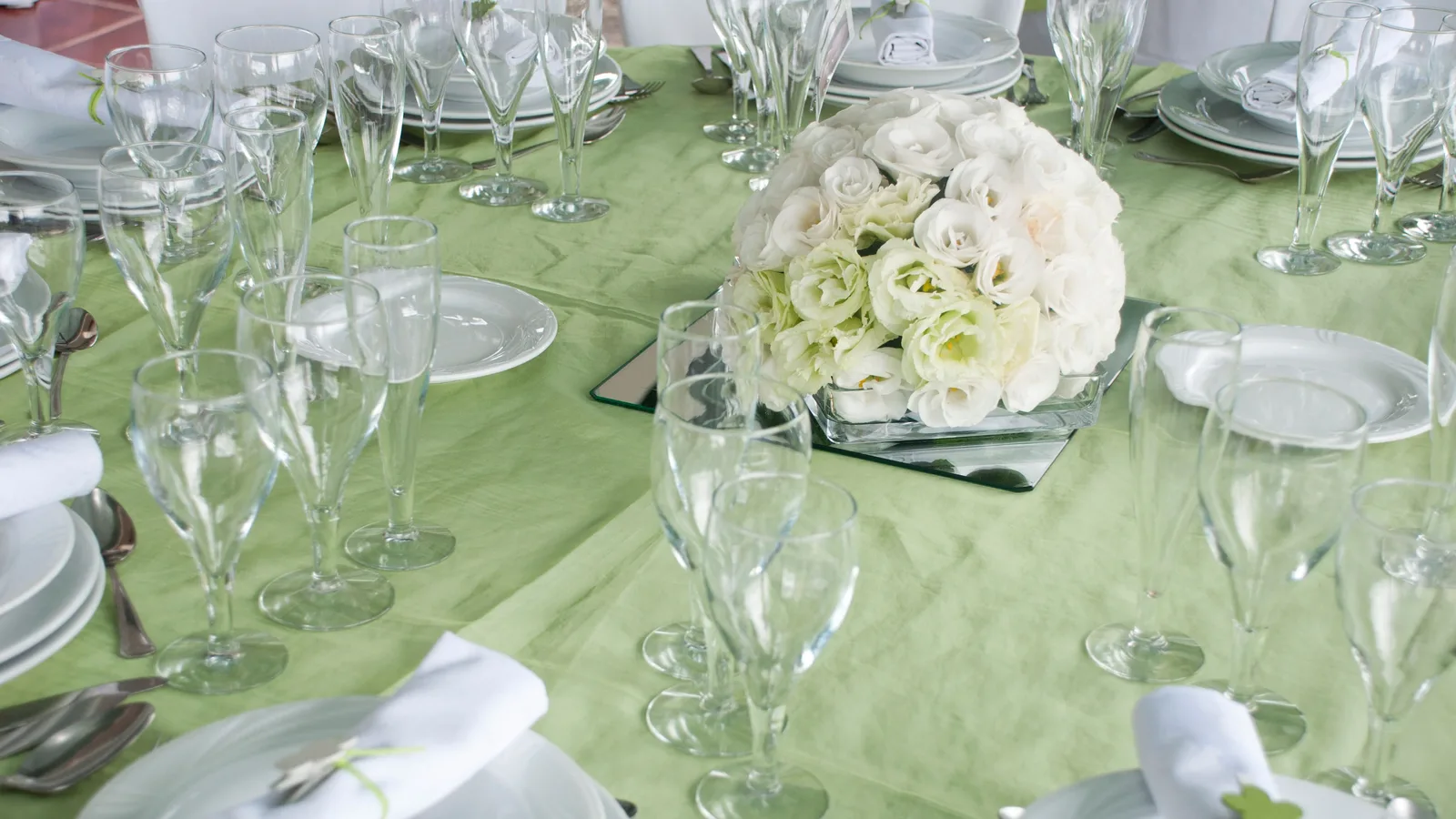
A standard dinner setting is built outwards from the plate. The fork sits on the left, the knife on the right with the blade turned in towards the plate, and the spoon to the right of the knife. The side plate goes to the left of the forks, the water glass sits above the tip of the knife, and the napkin goes either to the left of the forks or folded on the plate.
Line the bottoms of the cutlery up about 2 cm from the table edge so the whole row reads as a straight line. Everything a diner needs should be within easy reach without stretching, and nothing should be closer than about 5 cm to the edge, where it can be knocked off.
- Fork
- Left of the plate, tines up
- Knife
- Right of the plate, blade turned inwards
- Spoon
- Right of the knife
- Side plate
- Left of the forks
- Water glass
- Top right, above the tip of the knife
- Napkin
- Left of the forks, or folded on the plate
- Cutlery line
- Handles about 2 cm in from the table edge
What you need before you start
You don't need a full canteen of silver, but gather everything before you begin so you're not walking back and forth with a hot dish waiting.
- A cloth or placemats, wiped and ironed if needed
- Dinner plates, plus side plates if you're using them
- Dinner forks, dinner knives and a spoon for each person
- Glasses: one water glass each, and wine glasses only if wine is being served
- Napkins — linen or paper, whichever suits the meal
- A water jug, salt and pepper, and any serving dishes you'll put on the table
Allow roughly 60 cm of table edge per person, and check that the chairs sit opposite each other rather than offset, which is what makes a setting look lopsided.
How to set a dinner table, step by step
-
01 /
Clear and wipe the table
Take everything off the table, wipe it with a damp cloth and let it dry completely. A hot serving dish straight onto bare wood or an unsealed finish will leave a white ring that is hard to shift.
-
02 /
Lay the cloth or placemats
Centre the cloth so the overhang is even at both ends — around 30 cm at each end and 20–25 cm at the sides looks generous without pooling on laps. If you're using placemats, line them up with the table edge and with each other; a ruler's width of difference is visible from across the room.
-
03 /
Work out the spacing
Position the chairs first, allowing about 60 cm of table width per person. Place settings should sit directly in front of each chair, evenly spaced, with settings on opposite sides lined up across the table. Leave the middle clear for serving dishes.
-
04 /
Place the dinner plates
Set a plate in front of each chair, centred on the placemat and roughly 2 cm from the table edge. If you're plating in the kitchen, you can stack the plates at one end and put them down as people sit.
-
05 /
Lay the cutlery
Fork on the left, knife on the right with the blade facing the plate, spoon to the right of the knife. The handles should line up along an imaginary line about 2 cm from the edge. Only put out the pieces the meal actually needs — if there's no soup, there's no soup spoon.
-
06 /
Add the side plate and butter knife
Place the side plate to the left of the forks, aligned with them. Lay a small butter knife across the plate with the blade turned inwards. If space is tight, the side plate can go above the forks instead, but never on the right, where it crowds the glasses.
-
07 /
Set the glasses at the top right
The water glass goes above the tip of the knife. If you're serving wine, put the wine glass to the right of the water glass and slightly forward, so it sits closer to the diner and is less likely to be knocked. Only set glasses for drinks you're actually pouring.
-
08 /
Finish the middle of the table
Fold the napkins to the left of the forks or lay one on each plate. Put the water jug, salt and pepper and any serving dishes in the centre with clear gaps between them so dishes can be passed without reaching across a neighbour. Walk around the whole table once at the end and check that every place has the same pieces in the same positions.
Everyday and formal settings compared
Most British homes sit somewhere between the two. Use the everyday version for weeknight suppers and the formal version for Christmas, birthdays and guests you want to make a fuss of.
| What changes | Everyday supper | Formal dinner |
|---|---|---|
| Cutlery | Fork, knife and one spoon | Every course laid out, used from the outside in, with the dessert spoon above the plate |
| Glasses | One water glass, or none if drinks are on the side | Water glass plus white and red wine glasses at the top right |
| Napkin | Paper napkin beside the fork or on the plate | Linen napkin, folded, to the left of the forks or on the plate |
| Side plate | Optional | Always, with a butter knife laid across it |
| Table covering | Placemats or bare wood | Ironed cloth, centred with even overhang |
| Centre of the table | Water jug and condiments | Low flowers, candles, salt and pepper, kept below eye level |
Glasses: the top right corner
Glasses are the easiest thing to get wrong because they're the item most often knocked over. Keep them clustered at the top right, above the knife, rather than spreading them across the setting.
- Water glass nearest the plate, wine glass to its right and slightly forward.
- No more than two glasses for a home dinner. Three is a restaurant layout and leaves no room for elbows.
- If you're serving a sparkling wine, use a white wine glass rather than a flute — it's more stable on a crowded table.
- Never put a glass where a serving dish will need to land when dishes are passed.
Napkins, condiments and the middle of the table
A napkin to the left of the forks is the safest choice and the one most guides agree on; folded on the plate is fine for a more relaxed meal and is easier when the table is crowded. Fold simply — a triangle or a neat rectangle — and make sure every napkin is the same size and shape.
Keep the centre of the table working space, not decoration. A water jug, salt and pepper, and one low arrangement of flowers or a couple of candles is plenty. Anything tall blocks the view across the table, which is the opposite of what a dinner table is for. Salt and pepper should travel together, and if you have room, put a small dish of butter out rather than passing a block around.
What commonly goes wrong — and how to fix it
| Symptom | Why it happens | The fix |
|---|---|---|
| Cutlery looks like it's sliding off | Handles set too close to the table edge | Line the handles up about 2 cm in, all at the same distance |
| Knife blade facing outwards | Old habit, or copying a restaurant table | Turn the blade in towards the plate — it's safer and it's the convention |
| Glasses keep getting knocked | Glass set too far forward, crowded against the plate | Move it to the top right, above the tip of the knife |
| Nowhere to put serving dishes | Settings spread across the full width of the table | Leave a clear channel down the middle and set places slightly narrower |
| Elbows collide all evening | Less than 60 cm of table edge per person | Remove a chair, use a bigger table, or serve from the side instead |
| Cutlery left over at the end | Copying a full formal layout for a two-course meal | Lay only what the meal uses and bring the rest out with the course |
| Setting looks uneven from the doorway | Each place laid separately and judged by eye at close range | Lay one setting as a template, then copy it place by place |
Adjusting for children, roasts and self-service
A Sunday roast needs more room than a pasta supper: put the carving dish and vegetable dishes on a side table or a trolley if the main table is small, and leave the gravy jug within reach of whoever is carving.
For children, use a smaller plate and fewer pieces — a fork, a knife and a spoon is plenty, and a plastic or enamel tumbler is more sensible than a wine glass. Set their place slightly further from the edge than an adult's.
For a self-service or buffet meal, lay only what each person needs at the table: a plate space, cutlery, a glass and a napkin. Stack the plates at one end of the buffet, put cutlery and napkins beside them, and arrange the dishes in the order people will serve themselves — savoury first, then bread, then anything cold that shouldn't get warm.
Clearing and resetting between courses
Clear from the right with your left hand, taking the plate and its cutlery together rather than stacking them in front of a guest. Take the side plate and butter knife at the same time, and leave the glasses — they stay for the rest of the meal.
Before the pudding, brush away crumbs with a folded napkin or a small brush, then put out the dessert cutlery: a fork and spoon above the plate, or a spoon alone with the handle to the right. If you laid dessert cutlery at the start, simply straighten it. Once everyone has left, wipe the table and store the cloth folded loosely rather than screwed up, so it needs less ironing next time.
Frequently asked questions about setting a dinner table
Do I have to use a tablecloth?
No. Placemats are perfectly acceptable and much easier to wash. A cloth reads as more formal, and if you use one, iron it and centre it so the overhang is the same at both ends.
Where does the dessert spoon go if it isn't on the table?
It sits above the plate with the handle pointing right. Plenty of households skip it and bring dessert cutlery out on a small plate with the pudding, which keeps the setting uncluttered.
Can I lay the table the night before?
Yes for plates, cutlery and the cloth. Cover the table with a clean sheet or cloth overnight, leave the glasses until just before the meal, and add napkins at the last minute so they don't pick up creases or dust.
What if my cutlery doesn't match?
It genuinely doesn't matter. Consistency of position matters far more than matching patterns — give everyone the same number of pieces in the same order and the table will still look deliberate.
How do I set the table for a buffet?
Put out only plates, cutlery, glasses and napkins at each place, and keep the centre of the table clear. Put serving dishes on a separate surface so guests aren't leaning across the table with a full plate.