How to brew coffee in a French press: a rich, grit-free cup
Coarse grounds, water just off the boil and a four-minute steep: a clear, step-by-step guide to brewing rich, grit-free coffee in a French press.
French press coffee: the short answer
A French press — a cafetière in most British kitchens — makes a full-bodied, oily cup in about five minutes, with no paper filter and nothing to plug in. The method is short: coarse grounds, water just off the boil, a four-minute steep, then a slow plunge. Get those four things right and everything else is fine-tuning.
The mistakes that ruin most cups are grinding too fine, pouring water that is still at a rolling boil, and leaving the brewed coffee sitting on the grounds after you have pressed. Sort those and even a basic press turns out a clean, rich cup.
- Ratio
- 1:16 by weight to start — 20 g coffee to 320 g water; 1:15 for a stronger cup, 1:17 for a lighter one
- Grind
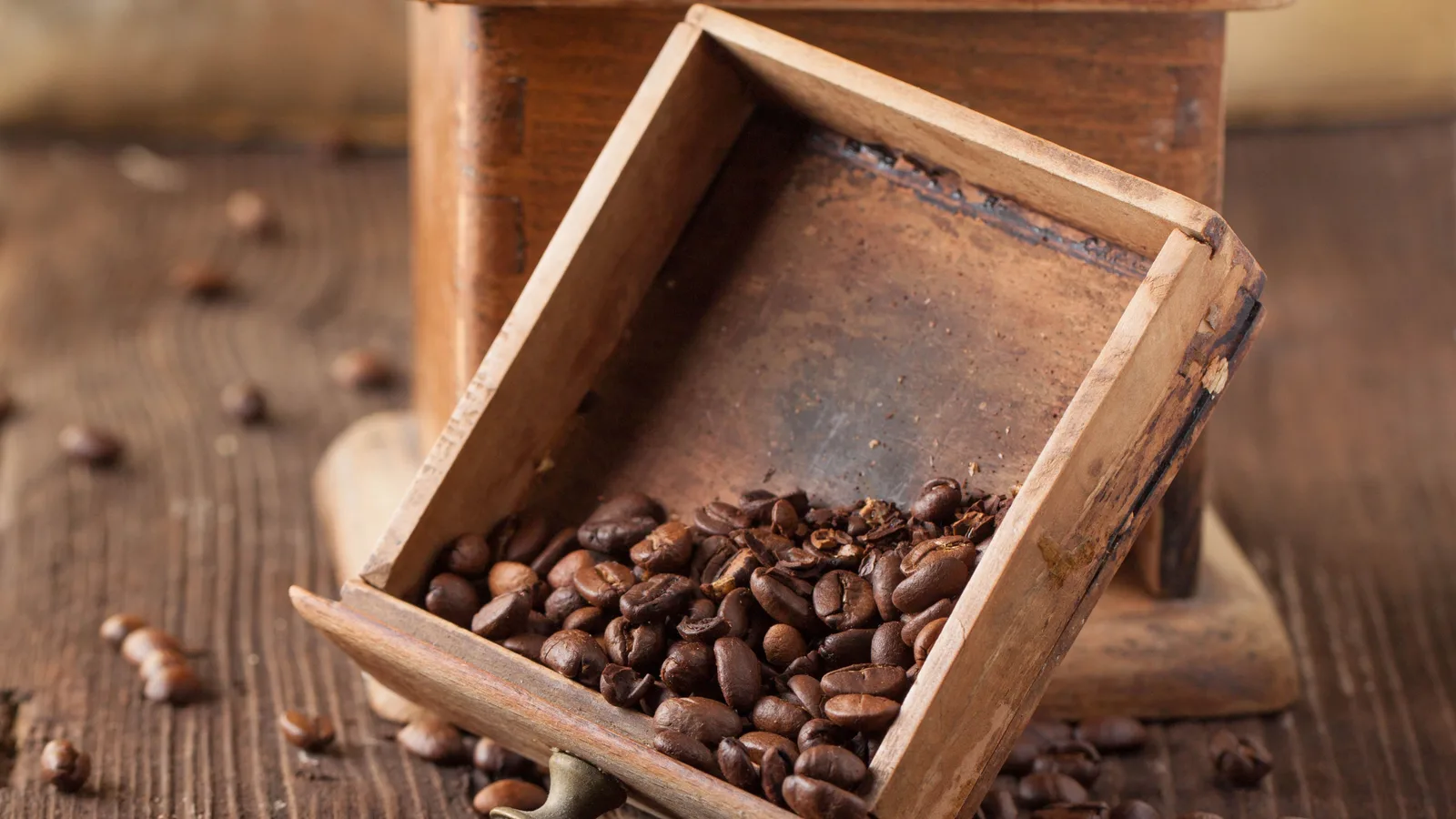
- Coarse, like sea salt or demerara sugar — visible flakes, no dust
- Water temperature
- 92–96 °C: boiled, then left to settle for about 30 seconds
- Steep time
- 4 minutes before you plunge
- The plunge
- One slow, even push over 15–20 seconds, stopping just above the bed of grounds
What you need before you start
- A French press. Anything from a one-mug 350 ml model to a 1 litre family size works; the method does not change.
- Coarse-ground coffee, about 20 g for every 300 ml of water.
- A kettle, a timer (your phone is fine), a mug or a jug, and a long spoon.
- Digital scales if you have them. They are the single biggest upgrade to consistency — a level tablespoon of coarse grounds is only roughly 5 g, so scooping by eye drifts.
- Optional: a thermometer if you want to hit 93–94 °C exactly, and two spoons for skimming the crust.
How to brew French press coffee, step by step
-
01 /
Preheat the press and your mug
Half-fill the beaker with hot tap water, swirl and tip it away. Do the same with your mug, so the coffee is not cooled the moment it lands.
-
02 /
Boil the kettle, then let it settle
Bring fresh water to the boil and take the kettle off the heat. Wait about 30 seconds, until the water is roughly 92–96 °C. Water at a full rolling boil pulls harsh, scorched notes out of the grounds.
-
03 /
Weigh the coffee and grind it coarse
Weigh 20 g of coffee for every 300 ml of water. Grind coarse — the texture of sea salt or raw demerara, with visible flakes rather than powder.
-
04 /
Add the grounds, then all the water
Tip the coffee into the warm beaker, shake it level, then pour the water in one steady go, making sure every ground is saturated. A thick crust of foam will form on top; leave it alone for now.
-
05 /
Stir once, gently
After about 30 seconds, break the crust with your spoon and give the slurry one slow stir — three or four turns is plenty. Over-stirring lifts fine particles that will end up in the cup.
-
06 /
Steep for four minutes
Set the lid on with the plunger pulled fully up and leave it. Four minutes suits a coarse grind at 93 °C; stretch to four and a half for a sweeter, heavier cup, or drop to three and a half if the last batch tasted bitter.
-
07 /
Skim the surface, then plunge slowly
Use two spoons to lift off the foam and any floating bits — this is what keeps the cup clean. Then press the plunger down in one slow, even push over 15–20 seconds and stop just above the bed of grounds. Do not drive it all the way down.
-
08 /
Pour it all out straight away
Decant every drop into mugs, or into a jug if you are not drinking it immediately. Coffee left standing on the grounds keeps extracting and turns woody within a few minutes.
Getting the ratio right for your press
Start at 1:16 — one part coffee to sixteen parts water by weight — then move towards 1:15 for a punchier cup or 1:17 for something lighter. Weigh the water if you can: 1 ml of water weighs 1 g, so a 500 ml press takes 500 g of water and about 31 g of coffee.
Brew only what you will drink. A French press is not a keep-warm vessel, and whatever is left in the beaker after ten minutes will taste stewed.
| Water | Coffee | Roughly serves |
|---|---|---|
| 300 ml | 19 g | 1 large mug |
| 500 ml | 31 g | 2 mugs |
| 1 litre | 63 g | 4 mugs |
Grind size: why coarse matters more than anything else
A French press has a metal mesh filter, not paper. Anything finer than coarse grit slips through the mesh and ends up as sludge at the bottom of the cup — the classic muddy cafetière. Fine grounds also clog the filter, which makes the plunge hard work and stretches the brew, so the coffee over-extracts and turns bitter.
Aim for the texture of coarse sea salt: individual flakes you can see, no dusty powder. If your grinder has settings, French press sits at the coarsest end, a step or two coarser than you would use for a filter machine. Freshly ground is better, but coarse coffee sold specifically for cafetières is a perfectly good starting point.
Troubleshooting: what went wrong and how to fix it
| Symptom | Likely cause | What to change |
|---|---|---|
| Bitter, drying, tea-like | Grind too fine, water too hot, or steeped too long | Grind coarser, let the kettle settle 30 seconds, cut the steep to 3½ minutes |
| Sour, thin and hollow | Under-extracted: water too cool or steep too short | Use water at 94–96 °C and steep a full 4–4½ minutes |
| Muddy, gritty last mouthful | Fine particles passing the mesh, or plunging too fast | Grind coarser, stir less, skim the crust and stop the plunge above the grounds |
| Lukewarm by the time you drink it | Cold beaker and mug, or coffee left standing | Preheat both, and pour within a minute of plunging |
| Plunger very stiff | Beaker over-filled or too much fine dust in the grind | Fill to two-thirds, grind coarser, push slowly in one movement |
| Tastes of last week's coffee | Old grounds trapped in the filter stack | Unscrew the filter and wash the mesh discs separately |
Tweaks: stronger, cleaner and iced
- Stronger without bitterness: keep the grind coarse and the steep at four minutes, but tighten the ratio to about 1:13. A finer grind or a longer steep adds harshness rather than body.
- Cleaner, closer to filter coffee: go to 1:17, and pour the brewed coffee through a small paper filter or a fine tea strainer to catch the fines.
- Iced: brew at roughly double strength (about 1:8) for the usual four minutes, then pour straight over a glass packed with ice, which dilutes it back to something like normal strength.
- For a crowd: use a bigger press but never fill past two-thirds. If you need more than that, brew two batches rather than one overfilled one.
Cleaning and caring for the press
Tip the spent grounds into the bin rather than the sink — a cafetière's worth of grounds will eventually block a drain. Rinse the beaker with warm water straight away, before the oils set on the glass.
Once a week, take the lid apart. Most plungers unscrew so the mesh discs and metal plates can be washed separately. Grounds lodge between the layers and go rancid, which is the usual reason a press that used to taste fine starts to taste stale. Wash in warm soapy water, rinse well, and let everything dry fully before reassembling.
Never put hot glass into cold water, or cold glass under a hot tap: thermal shock is the most common way these beakers break. Check the manufacturer's instructions before putting any part in a dishwasher.
French press questions
Do I need a special coffee for a French press?
No particular bean or roast is required. Medium and medium-dark roasts generally suit the method, because their oils carry through the mesh, while very light roasts can taste sharp without a paper filter. What matters far more is a coarse grind and reasonably fresh coffee.
Can I use a blade grinder?
Yes, with a little care. Pulse in short bursts, shake the grinder between pulses, then tip the grounds into a sieve and shake out the dust — that dust is what turns the cup muddy. A burr grinder gives a more even result.
How much coffee is a tablespoon?
A level tablespoon of coarse grounds weighs roughly 5 g, so a 300 ml mug needs about four level tablespoons. Treat it as a rough measure: scoops vary with how coarsely the coffee is ground and how heaped they are.
Is French press coffee stronger than filter coffee?
It usually tastes heavier, because the metal mesh lets coffee oils and fine particles into the cup that paper filters trap. Actual caffeine depends on how much coffee you dose and the ratio you use, not on the brewing method itself.
Can I leave the coffee in the press and reheat it later?
It is better not to. Once plunged, the brew keeps extracting from the grounds and turns bitter within minutes, and reheating makes it worse. Pour it all into a flask or jug if you want to keep it warm for an hour or so.