How to care for wooden chopping boards in 6 simple steps
A simple routine for washing, drying, oiling and reviving wooden chopping boards so they stay smooth, smell fresh and last for years.
The short answer: keep water out, keep oil in
Wooden boards rarely wear out from chopping. They fail because of water. The grain swells when the board soaks, then splits as it dries, and the surface goes pale, dry and fuzzy once the oil has been washed out of it. Keep the wet time short, dry the board upright, and oil it thinly and often, and a good board will outlast several plastic ones.
The routine, in short:
- Wash by hand in warm, soapy water and rinse straight away — never leave it standing in the sink.
- Dry it on edge so air reaches both faces.
- Oil it thinly about once a month, and more often in a board's first year.
- Lift smells with coarse salt and half a lemon, and sand out deep cuts before they hold moisture.
What you need before you start
- Warm water and mild washing-up liquid
- A few drops is plenty. Heavily perfumed or harsh degreasing liquids strip the oil finish faster.
- Two clean tea towels
- One for wiping off standing water, one kept for buffing oil into the surface.
- Food-safe mineral oil or board butter
- Sold as chopping board oil, or as a blend of mineral oil and beeswax. It must be labelled food-safe.
- Fine sandpaper and a sanding block
- 240-grit and 320-grit, wrapped around a flat block so the surface stays level.
- Coarse salt and a lemon
- For lifting smells and pale stains out of knife cuts.
- A drying spot
- A dish rack or clear worktop where the board can stand on its long edge for 12–24 hours.
How to clean and oil a wooden board, step by step
-
01 /
Wash by hand, one face at a time
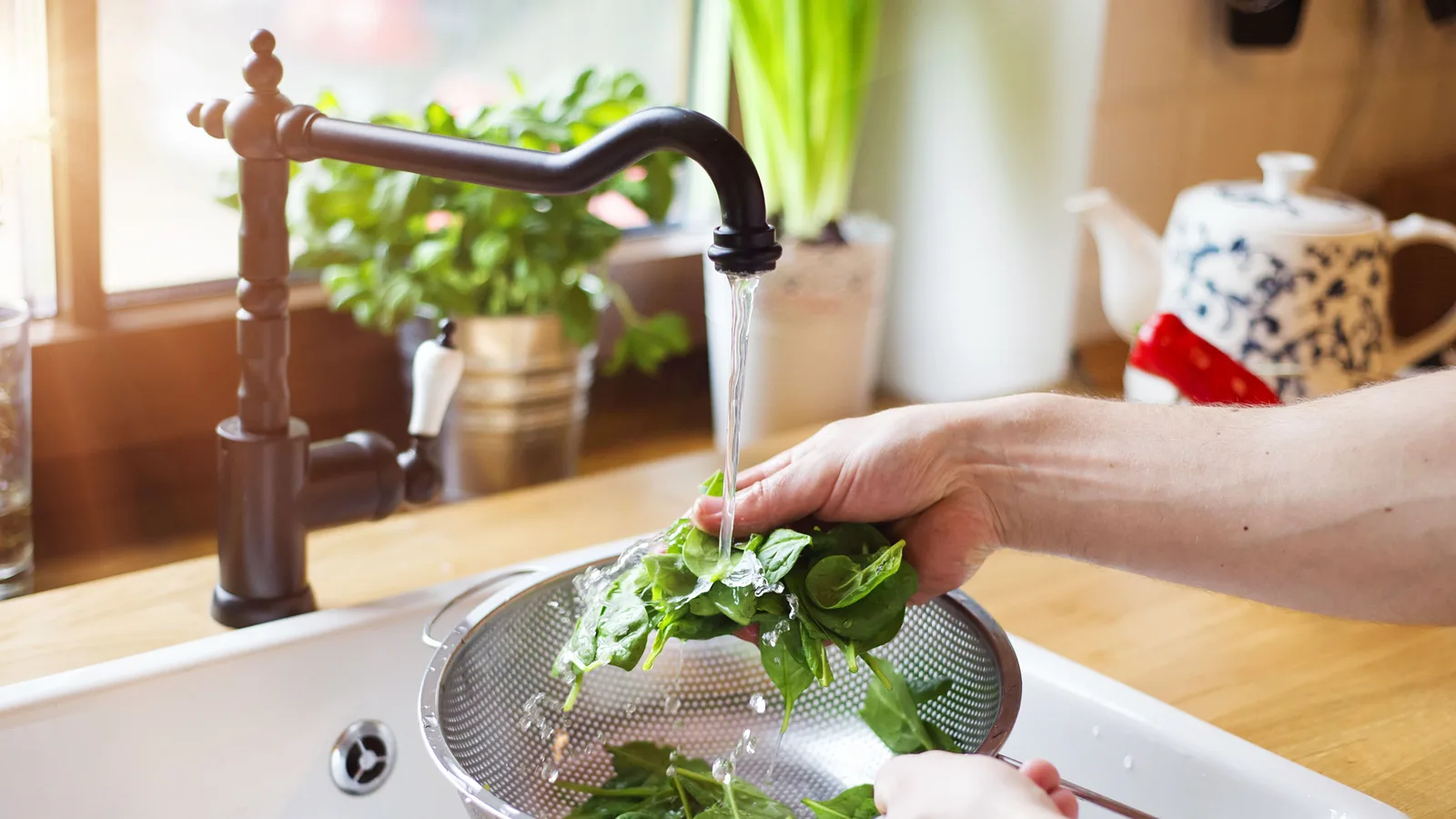
A few drops of mild washing-up liquid in warm water is all you need. Use a dishcloth or a soft brush and work along the grain rather than across it. Skip the scouring pad — it raises the grain and scuffs the surface. Wash one face, turn it over, wash the other, and don't let the board sit in a sink full of water.
-
02 /
Rinse briefly and wipe away standing water
Rinse under a running tap for a few seconds, then wipe the surface dry with a tea towel. Don't leave it flat on the drainer to drip: water pooling underneath is what warps a board and leaves dark patches in the grain.
-
03 /
Stand it on edge to finish drying
Prop the board upright on its long edge with both faces open to the air — against a wall with a gap behind it, or in a dish rack. Give it 12–24 hours before it goes back in a cupboard. A board that is put away cool and slightly damp will smell musty within a week.
-
04 /
Oil it thinly, roughly once a month
Use food-safe mineral oil or a mineral oil and beeswax blend at room temperature; warming the bottle in a bowl of hot water helps it sink in. Apply a thin coat with a lint-free cloth across both faces, the edges and the end grain, leave it 20 minutes, then buff off anything still sitting on the surface. Never flood the board.
-
05 /
Lift smells with coarse salt and lemon
Sprinkle a generous handful of coarse salt over the board and rub it in with the cut face of half a lemon. Leave it 10 minutes, then scrape the salt into the bin, rinse quickly and dry upright as usual. Do this when the board smells, not every week — the acid is drying over time.
-
06 /
Sand out deep cuts, then re-oil straight away
If the surface feels fuzzy or deep knife scars are holding onto stains, sand with the grain using 240-grit, then 320-grit, keeping the paper flat. Wipe off the dust and oil the board immediately: freshly sanded wood is bare and takes on water fast.
How often to oil — and how much is too much
A board in daily use wants a thin coat about once a month. In its first year, a new board drinks oil faster, so expect to oil it every couple of weeks until the surface stops absorbing so readily. A board that comes out only at Christmas needs oiling seasonally and a check before each use.
Oiling is not a case of more is better. A thick, wet layer sits on the surface, stays tacky, attracts fluff and never properly cures. Thin coats, buffed dry, are what protect the wood.
Stains, smells and that grey, dry look
- Beetroot, turmeric and berry stains: rub with a paste of bicarbonate of soda and a little water, leave 10 minutes, then rinse and dry upright. Repeat once if the stain is faint but still there.
- A musty or oniony smell: the salt and lemon scrub above, then an hour in the open air. Keep the board out of direct sun for long spells, as fast drying can open cracks.
- A grey, dry-looking surface: this is oxidised, un-oiled wood rather than dirt. A light sand with the grain and a fresh coat of oil brings the colour back within a day.
- Sticky patches: too much oil has been left on the surface. Scrub with hot soapy water and a nylon brush, dry completely, then re-oil thinly and buff.
Common problems and how to fix them
| Problem | Likely cause | What to do |
|---|---|---|
| Board has warped | Dried flat on one face, or left soaking | Damp both faces evenly and stand it on edge with a little weight on the high corners for a few days; mild warps often settle. |
| Black or green spots | Mould growing in damp grain | Wash in hot soapy water, sand the spots out, dry fully in the air, then oil. |
| Surface feels fuzzy | Raised grain from soaking or scrubbing | Light sand along the grain at 240-grit, dust off, re-oil. |
| Cracks at the ends | Fast drying near heat, or a board that has never been oiled | Sand the edges smooth, oil generously including the end grain, and store away from radiators and ovens. |
| Tacky, sticky finish | Too much oil, or a cooking oil that has gone off | Scrub with hot soapy water and a nylon brush, dry completely, re-oil thinly and buff dry. |
| Glue lines opening | Repeated soaking over months | Stop soaking it, dry upright and oil the edges. If the split runs right through, it needs regluing or replacing. |
Some damage is not worth repairing. Retire a board if a crack runs through the full thickness where it will trap food, if mould has spread deep into the grain and returns after sanding, if the layers are separating along several glue lines, or if it has worn so thin it flexes under the knife.
Raw meat, fish and food safety
Wood is not self-cleaning, and raw poultry, mince and fish need more than a quick wipe. Keep one board for raw meat and fish if you can, and wash it within minutes of use, before the juices dry into the cuts. Hot soapy water, a soft brush worked along the grain, a thorough rinse, then a wipe with dilute white vinegar, and stand it on edge to dry completely before it is used again. Never put a raw-meat board away damp.
Avoid chlorine bleach on wooden boards: it dulls the surface and can leave residue down in the knife cuts. Very hot water straight from the kettle is also best avoided, as the sudden heat can open cracks in a cold board.
Storage and daily habits that add years
- Store boards on edge, with air on both faces, rather than stacked flat or slotted tight against a wall.
- Use both sides. Flipping the board spreads the knife marks and keeps moisture uptake even.
- Scrape food into the bin with a bench scraper or the back of a knife rather than the blade edge, which digs in.
- Never chop on glass, stone or a bare worktop, and don't use the board as a trivet for a hot pan — heat dries the wood unevenly and opens cracks.
- Keep boards away from radiators, ovens and dishwashers. The heat and the long wet cycle are the two fastest ways to ruin one.
Frequently asked questions
Should I oil both sides of a wooden board?
Yes — both faces, plus the edges and end grain. Oiling only the top makes the two faces take up moisture at different rates, which is a common cause of warping.
Is bamboo treated the same way?
Largely, yes: hand wash, dry upright and oil regularly. Bamboo is dense but drinks oil, so it usually needs oiling more often and is less forgiving of soaking.
Can I use vinegar or bleach to disinfect a board?
A wipe with dilute white vinegar after washing and rinsing is fine. Chlorine bleach is best avoided on wood because it dulls the surface and can leave residue in the cuts. Either way, the board must dry fully.
Why has my board gone grey?
The surface has dried out and oxidised from washing. A light sand along the grain followed by a fresh coat of oil restores the colour.
How long should a wooden board last?
A thick board washed by hand, dried on edge and oiled regularly can last decades, because the surface can be sanded back several times as it wears.