Air Fryer vs Convection Oven 2026: Which Cooks Better?
Air fryer or convection oven? We compare speed, crispness, baking, batch size and running costs so you can pick the right one for your kitchen.
Air fryer vs convection oven: the winner
An air fryer and a convection oven do the same job at different scales. A heating element warms the air, a fan pushes it over the food, and that moving air browns and crisps the surface far better than still heat. Because the principle is identical, the results can be almost indistinguishable on the plate.
What changes is how much you can cook at once, how well the appliance bakes, and how much of your kitchen it takes over. This guide compares the two on the things that actually decide the purchase for UK kitchens: crispness, speed, batch size, baking, cleaning, running costs and space.
What each one actually is
Air fryer. A countertop appliance with a heating element and a powerful fan built into a small cavity. Most UK models are drawer-and-basket designs you pull out and shake halfway through; a few are oven-style boxes with wire shelves. The element sits close to the food and the fan shifts air quickly, which is why chips crisp in a fraction of the time a big oven needs.
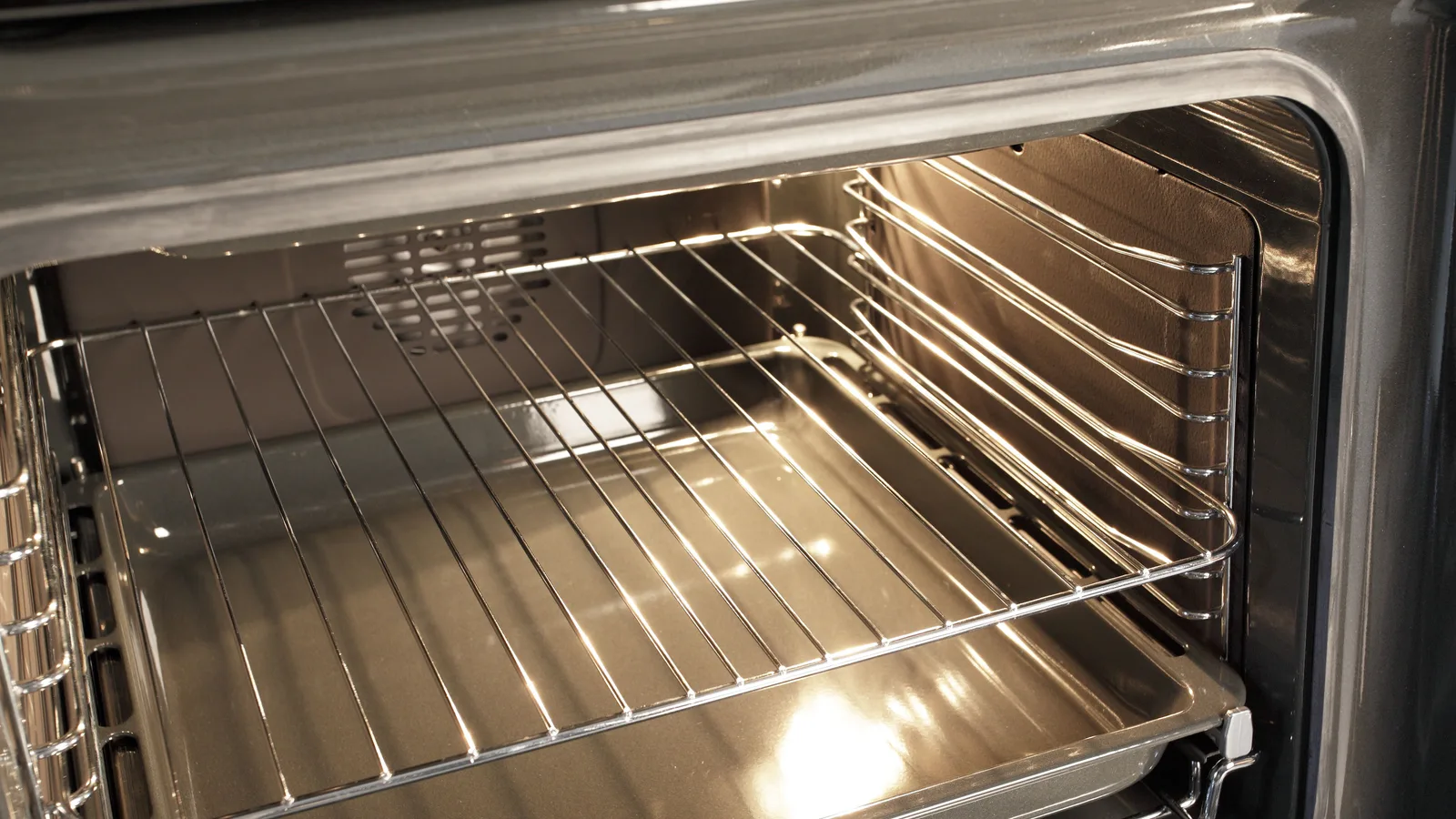
Convection oven. In a UK kitchen this usually means a fan oven — a full-size built-in or freestanding oven with a fan at the back that circulates heat evenly around the cavity. Fan-assisted models combine that fan with a conventional element. Either way it is a large, insulated box with room for several shelves at once.
Head to head: where they differ
| What matters | Air fryer | Convection oven |
|---|---|---|
| Best at | Chips, wings, roast veg, reheating and small weeknight portions | Big roasts, baking, batch cooking and feeding a family |
| Space | Takes a patch of worktop plus clearance for the vents | Built in or freestanding; leaves the worktop clear |
| Preheat | None, or a couple of minutes at most | Several minutes to reach temperature |
| Capacity per batch | One or two generous portions at a time | A whole chicken, several trays or a large cake tin at once |
| Crisping | Excellent — fast-moving air in a tight cavity | Good, but slower and less even on a single tray |
| Baking and pastry | Limited to small tins; browning can be uneven near the element | Much better — even heat and room for proper tins |
| Cleaning | Drawer, basket and tray lift out; check whether yours is dishwasher-safe | Shelves, trays, door glass and enamel — more surface area |
| Running cost for one portion | Lower: a small cavity heated briefly | Higher: a large cavity heated for a small meal |
| Noise | Noticeably loud — the fan sits beside you | Quieter in the room, though the fan hums |
Two rows decide most purchases: capacity and baking. If you regularly cook for four or more, or you bake, the oven's larger cavity wins outright and no air fryer will make up the difference. If most meals are for one or two people, the air fryer's speed and crispness are hard to argue with.
Air fryer: strengths and weaknesses
Why people love them
- No real preheat, so dinner is quicker on a weeknight
- Crisper chips, wedges and chicken wings than a full-size fan oven, with less oil
- Cheaper to run for small portions because you heat a few litres, not a whole cavity
- Sits on the worktop, so nothing to install — handy in rented flats
- Easy to pull out, shake and check as it cooks
Where they fall short
- You cook in batches; a family meal can take two or three rounds
- Poor at baking: small tins only, and browning can be patchy near the element
- Uses worktop space and needs clearance around the vents
- The fan is loud in a quiet kitchen
- Non-stick baskets need gentle washing to last
Convection oven: strengths and weaknesses
Why the oven still earns its place
- Far more capacity: a whole chicken, several trays or a large cake at once
- Even, reliable heat for bread, pastry and cakes
- Roast, bake and grill without swapping appliances or clearing space
- Nothing to store away — it is already part of the kitchen
Where they fall short
- Slow to preheat and wasteful for a single portion
- Less crispness on chips and wings unless you use the grill or a wire rack
- More surface area to clean: shelves, trays, door glass and base
- Most ovens have a hot corner or shelf position you learn to avoid
Running costs, space and noise
Energy use follows the size of the cavity. Heating a small air fryer for a quarter of an hour takes far less than bringing a full oven up to temperature for the same portion, which is why the air fryer usually wins on running costs for everyday meals. That advantage fades if you need three batches to feed everyone — at that point the oven is doing the same work in one go, and the sums even out.
Space is the trade-off that rarely gets mentioned in the shop. An air fryer needs a clear patch of worktop plus breathing room around its vents, and it becomes the appliance you shift every time you want to chop vegetables. A built-in oven costs you nothing above the counter.
Who should choose an air fryer
- One- and two-person households. The basket size matches the portions you actually cook, so nothing is wasted.
- Chip, wing and roast-veg people. This is where the gap between the two appliances is widest.
- Anyone reheating. Leftover pizza, pasties and roast potatoes come back to life in minutes rather than after a full preheat.
- Small or rented kitchens. No wiring, no fitting, no landlord to negotiate with.
- Households with a slow main oven. A good air fryer can carry most weeknight cooking on its own.
Who should choose a convection oven
- Bakers. Cakes, sourdough, pastry and Yorkshire puddings need even heat across a wide cavity and room for a proper tin.
- Families and batch cooks. One tray of roasted vegetables for six beats three rounds in a basket.
- Sunday-roast households. A whole chicken or joint with potatoes and veg alongside is oven territory.
- Entertainers. Timing several dishes to land together is far easier with multiple shelves.
- Anyone whose kitchen has no spare worktop. A built-in fan oven asks for nothing above the counter.
Can an air fryer replace a convection oven?
As a second appliance, yes — for many people it becomes the most-used thing in the kitchen. As a straight replacement, only if you rarely bake, rarely cook for more than three, and are happy to work in batches.
Most kitchens end up with both: the air fryer takes the fast, crisp, small jobs, and the fan oven handles baking, roasting and anything that needs a large tray. If you are choosing one first, buy the air fryer for speed and crispness and keep the oven for the days that need volume.
The final verdict
The air fryer takes the overall win because it improves the meals most of us cook most often. It heats faster, crisps better and costs less to run for a plate of chips or a tray of vegetables, and it does it without a long preheat or a whole oven's worth of energy.
The convection oven remains the better appliance for baking, for large joints and for feeding a crowd — and if those are your priorities, it wins comfortably. Judge it by your own week: small, quick and crisp tips it to the air fryer; big trays and pastry tip it to the fan oven.
Common questions
Do air fryer recipes work in a fan oven?
Broadly, yes. Use the same ingredients and add a little time, and start checking earlier than the recipe suggests, because a large oven cavity behaves differently from a small, fast-moving one. Watch the first attempt closely rather than trusting a fixed conversion.
Is an air fryer really anything more than a small fan oven?
Mechanically it is much the same idea: element plus fan. The difference is scale and airflow. A compact cavity with the element close to the food and a strong fan shifts heat far more aggressively, which is why chips brown faster and crisper than in a large oven.
Why are my air fryer chips soggy?
Almost always overcrowding. A piled basket traps steam and the air can't reach the food. Cook in a single layer, dry the potatoes properly before oiling, shake the basket partway through, and give them a few extra minutes rather than more oil.
Can I use foil or baking parchment in an air fryer?
Yes, provided it is weighted down by food and never left loose, and you don't cover the whole base so the air can still circulate. Don't run an empty preheat with parchment inside — it can lift into the element.
Does a fan oven cook faster than a non-fan oven?
Yes, which is why British recipes often list a separate fan temperature. If a recipe gives one figure only and your oven has a fan setting, drop the heat a little and check earlier the first time you make it.